Franklin County Dog Registration Information
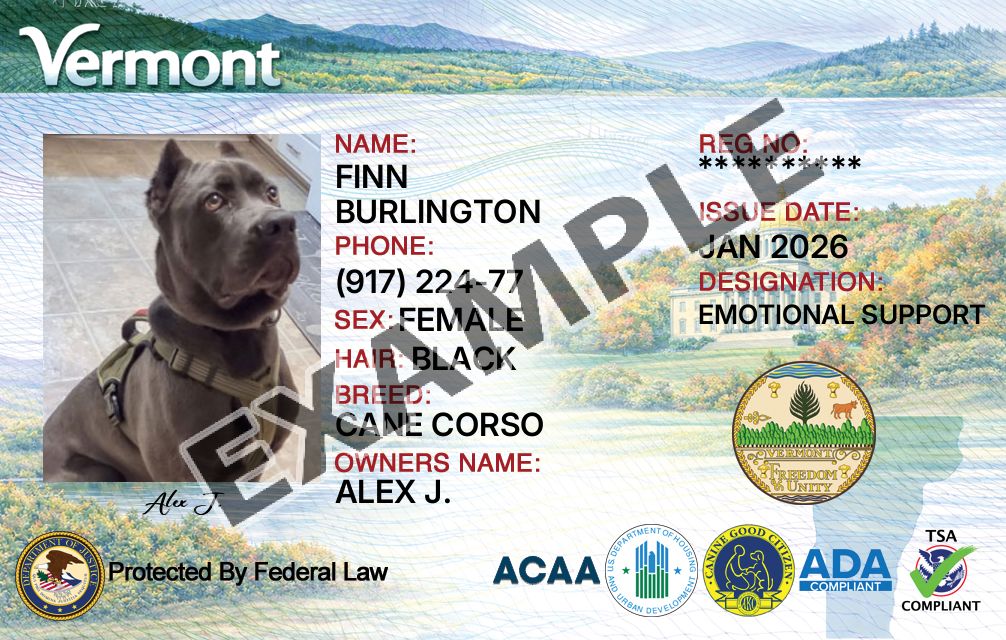
Service Dogs and Emotional Support Animals in Franklin, Vermont
Registering a Dog in Franklin County, Vermont (Service Dog or Emotional Support Dog)
If you’re searching where do I register my dog in Franklin County, Vermont for my service dog or emotional support dog, the key detail is that Vermont dog registration is usually handled locally—by the town or city clerk where your dog lives. In other words, you typically obtain a dog license in Franklin County, Vermont through your municipality (not a private company). This page explains where to register a dog in Franklin County, Vermont, what documents you’ll need (especially rabies records), and how licensing differs from service dog and emotional support animal rules.
Where to Register or License Your Dog in Franklin County, Vermont
Because dog licensing is handled at the local level, the right office depends on your exact town or city address within Franklin County. Below are several example official offices that residents commonly use for an animal control dog license Franklin County, Vermont process (licensing is typically issued by the clerk; animal control may assist with enforcement and reminders).
Example Offices (Official / Local Government)
City of St. Albans — City Clerk’s Office (Animal Licenses)
- Street address: 100 North Main St.
- City/State/ZIP: St. Albans, VT 05478
- Email: j.mullican@stalbansvt.com
- Hours: Not listed on the referenced page
- Phone: Not listed on the referenced page
Town of Georgia, Vermont — Town Office / Town Clerk
- Street address: 47 Town Common Road North
- City/State/ZIP: St. Albans, VT 05478
- Phone: (802) 524-3524
- Hours: Mon.–Fri., 8:00 AM–4:00 PM
- Email: Not published on the referenced listing
Town of Swanton, Vermont — Town Clerk (Licensing referenced under Animal Control)
- Address: Not listed on the referenced page
- City/State/ZIP: Swanton, VT (ZIP not listed on the referenced page)
- Phone (licensing info line): (802) 868-4421
- Email: Not listed for the clerk on the referenced page
- Hours: Not listed on the referenced page
Town of Milton, Vermont — Town Clerk’s Office (Dog Licenses)
- Address: Physical address not shown in the excerpted section of the referenced page
- City/State/ZIP: Milton, VT 05468 (mailing ZIP referenced on town materials)
- Phone: Not listed in the excerpted section of the referenced page
- Email: The page lists staff contact options, but does not display a single plain-text email in the excerpted section
- Hours: Not listed in the excerpted section of the referenced page
Overview of Dog Licensing in Franklin County, Vermont
What “registration” usually means in Vermont
In everyday terms, “registering your dog” in Franklin County generally means getting an annual municipal license and tag. Vermont law requires an owner of a dog (or wolf-hybrid) more than six months old to have the dog registered, numbered, described, and licensed each year through the clerk of the municipality where the dog is kept. The clerk issues a license tag, and the dog is expected to wear a collar with that tag attached.
Why the county name matters (and why your town matters more)
Many people search for a countywide office, but in Vermont the process is primarily municipal. Franklin County includes multiple towns and at least one city, and each community’s clerk’s office typically administers licensing within its borders. That’s why the best answer to where to register a dog in Franklin County, Vermont is: start with your town/city clerk. Animal control officers may help with compliance and enforcement, but the license itself is commonly issued by the clerk.
Rabies vaccination is a core requirement
Before you can obtain a license for a dog six months of age or older, Vermont law requires you to provide the municipal clerk with a current preexposure rabies vaccination certificate (or a certified copy) issued by a licensed veterinarian, and the clerk keeps it on file. Vermont law also describes what “current vaccination” means, including an initial vaccination schedule and booster requirements. In practice, your town clerk will usually ask for a copy of the rabies certificate when you apply or renew.
Service dogs and ESAs: licensing is separate
A municipal dog license is not the same thing as a service dog “certification,” and it’s not an emotional support animal (ESA) “registration.” Even if your dog is a service animal or emotional support animal, you may still be expected to follow local licensing and rabies vaccination rules, unless a specific legal exemption applies in your municipality.
How Dog Licensing Works Locally in Franklin County, Vermont
Step-by-step: typical municipal licensing workflow
- Identify your licensing municipality. License your dog with the town or city where the dog is kept (your residence). This is the most important step for anyone searching animal control dog license Franklin County, Vermont because enforcement is local.
- Gather required documents. Most offices will request a current rabies vaccination certificate, and many ask for spay/neuter proof if you want the altered-dog rate. Vermont law specifically requires rabies proof before licensing dogs six months or older.
- Submit your application and fee. Many clerks accept in-person submissions and may also allow mail, drop box, or email submission depending on the municipality. For example, the City of St. Albans describes mail, in-person drop box, and email submission options for animal licenses.
- Receive your license tag. The clerk issues a tag; Vermont law expects the dog to wear a collar with the tag attached.
- Renew annually and update records. Licensing is annual and generally due by early spring; many municipalities reference the April 1 deadline.
Deadlines, age thresholds, and timing
Vermont law states that dogs more than six months old must be licensed annually on or before April 1 in the municipality where kept. Some towns also describe local expectations (for example, Swanton notes dogs must be licensed by April 1 and vaccinated for rabies, and that licenses are available at the town clerk’s office). If you acquire a dog after the deadline, some municipalities provide local instructions for licensing within a short time window; Milton, for instance, notes that if you become an owner after April 1 you need to license within 30 days.
Fees and local surcharges
Fees can vary by municipality, with different rates for altered vs. unaltered dogs and possible late fees. Vermont law also references mandatory and optional surcharges tied to spay/neuter programming and rabies/animal control programs. Your clerk’s office is the best source for the exact total you will pay in your town.
What if you need help beyond licensing (animal control, bites, rabies enforcement)
In many Franklin County communities, animal control (or a designated officer/department) handles complaints such as stray dogs, leash law issues, bites, and enforcement actions. If you’re trying to solve a problem (lost dog, bite report, nuisance complaint), contact your town’s animal control resources; for licensing itself, start with the clerk.
Service Dog Laws in Franklin County, Vermont
A dog license is not a “service dog registration”
When people ask where do I register my dog in Franklin County, Vermont for my service dog, they’re often mixing two separate concepts: (1) the municipal dog license (a local registration and rabies compliance process), and (2) service dog status (a legal accommodation concept). The municipal dog license is issued by your town or city clerk; it does not “grant” service dog rights.
What makes a dog a service dog (in practical terms)
Generally, a service dog is a dog trained to perform tasks for a person with a disability. The legal protections typically relate to access and accommodations. However, those protections do not replace local public health rules: you should still plan to keep rabies vaccinations current and maintain your dog’s municipal license if required by your town.
Local licensing still matters for identification and compliance
Even if your dog is a working service animal, municipal licensing can matter for practical reasons: it helps establish ownership, can support reunification if lost, and keeps your records aligned with rabies requirements and local enforcement practices.
Emotional Support Animal Rules in Franklin County, Vermont
An ESA is different from a service dog
If you’re searching where do I register my dog in Franklin County, Vermont for my emotional support dog, it’s important to know that “emotional support animal” usually refers to an animal that provides comfort by presence, often in the context of housing accommodations. ESAs are not the same as service dogs trained to perform specific tasks.
There is usually no municipal “ESA registry” required for licensing
Town clerks generally issue the same municipal dog license regardless of whether you call your dog a pet, service dog, or emotional support animal. The municipality’s focus is typically on licensing compliance, identification, and public health requirements like rabies vaccination. Avoid paying for third-party “registrations” that do not replace your local requirements for a dog license in Franklin County, Vermont.
ESAs and local dog licensing: how they fit together
An ESA designation (often used for housing-related accommodation requests) does not automatically waive municipal rules. If your municipality requires licensing and proof of rabies vaccination, you should comply the same way you would for any other dog.
Frequently Asked Questions
Register A Dog In Other Vermont Counties
Select your county below to get started with your dog’s ID card. Requirements and license designs may vary by county, so choose your location to see the correct options and complete your pup’s registration.
- Addison County Dog Registration
- Bennington County Dog Registration
- Caledonia County Dog Registration
- Chittenden County Dog Registration
- Essex County Dog Registration
- Grand Isle County Dog Registration
- Lamoille County Dog Registration
- Orange County Dog Registration
- Orleans County Dog Registration
- Rutland County Dog Registration
- Washington County Dog Registration
- Windham County Dog Registration
- Windsor County Dog Registration